A Table-Read Plan for a First Draft
A table-read plan for a first draft helps you hear where listeners lose the thread, keep feedback focused and leave with one clear revision task.
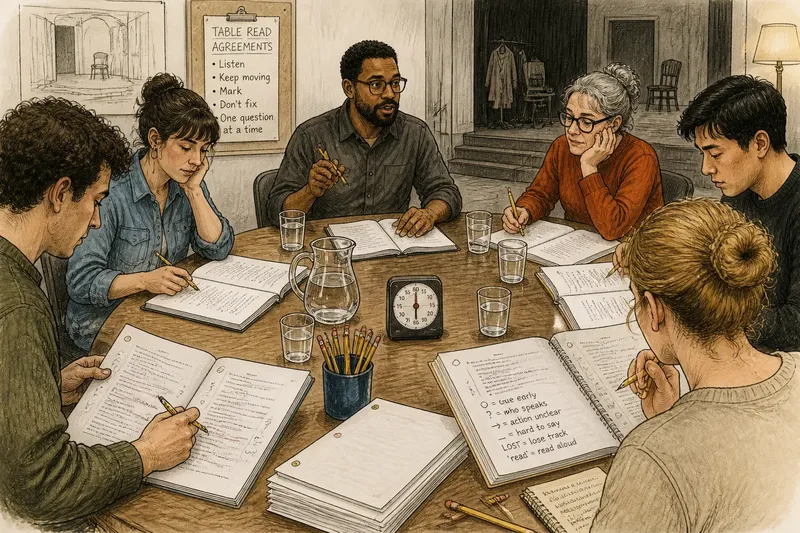
A table-read plan for a first draft should keep the room listening, not editing. Put matching scripts, pencils and a timer on the table, then agree that readers will carry the story through before discussing its rough spots. That gives you a clear record of what the script communicates when nobody stops to explain it.
Set the reading brief
Tell the group what this session is for: hearing the draft aloud and noting where listeners need more information. It is not a verdict on the play or a meeting to rewrite every line. The writer does not need to defend choices while the story is still unfolding.
Invite the writer, a reader for each speaking role and a facilitator who can keep time and note page references. If there are fewer readers than roles, the facilitator can take the remaining parts. Give everyone the same script version, with page numbers and stage directions easy to see.
Ask readers to use ordinary speaking voices. A polished performance can smooth over a clumsy sentence or supply an intention that the page has not made clear. Readers should mark moments of uncertainty and continue, rather than stopping to explain them.
Prepare the table
Arrange chairs so readers can hear one another and follow their scripts. Set out water, pencils and spare copies. Leave props and costumes aside; they can steer attention towards production choices before the words have had a fair hearing.
Agree on a small set of marks before the read:
- If a cue seems to arrive before its reason is clear, circle it; if the reason becomes clear as the scene continues, leave the mark for later review, otherwise discuss whether the script needs an earlier signal.
- If you cannot tell who speaks, add a question mark beside the cue; if the speaker becomes clear from the next line, keep reading, otherwise flag the moment for clarification.
- If an entrance or transition is hard to follow, draw an arrow; if the next direction makes the movement clear, note that context, otherwise consider whether the sequence needs a clearer stage direction.
- If a phrase is difficult to say aloud, underline it; if the reader can speak it naturally on a second try, keep it as a light note, otherwise review its wording after the read.
- If you lose track of what listeners should attend to, write “lost” in the margin; if a later line restores the thread, note where, otherwise flag the missing information for discussion.
- If a stage direction contains information listeners need, mark it with “read”; if the information is private intention or an optional staging idea, leave it unvoiced and let the facilitator decide whether readers need a brief neutral explanation.
These marks are listening notes, not instructions to rewrite. Ask readers to avoid drafting replacement dialogue in the margins. The writer first needs a precise account of where the group’s attention shifted.
Keep the read moving
Start at the opening and continue through the draft without pausing for ordinary line edits. If a reader stumbles, they can try the line once more and carry on. The facilitator should pause only when the group cannot identify the speaker, follow the action or locate the next moment; note the page, then resume without debating the wording.
Read stage directions aloud when they give listeners necessary information, such as who enters or what object matters. Read them plainly rather than acting them out. Directions about private thought or possible staging can stay unvoiced unless the group needs a neutral explanation to follow the scene.
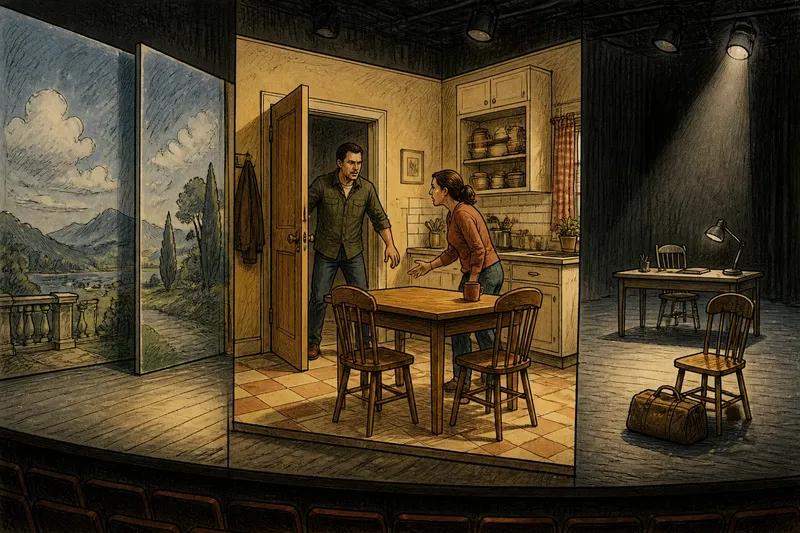
Say you are reading a scene where one character exits and another refers at once to an object left behind. If the group cannot tell whether that object is onstage, mark the cue and continue. Afterwards, the writer can weigh a clearer direction against a spoken reference or a changed entrance; the read identifies the gap without choosing the fix.
Discuss what listeners heard
Pause after an act or major section, not after every mark. Ask readers to name one moment they followed easily and one moment that required extra effort. Have them point to the page and describe what they expected, what the script supplied and when the difference became clear.
If several readers mark the same place, record the overlap. If just one reader marks it, record that too. Do not treat marks as votes: their value is in locating a listening problem, not grading the draft.
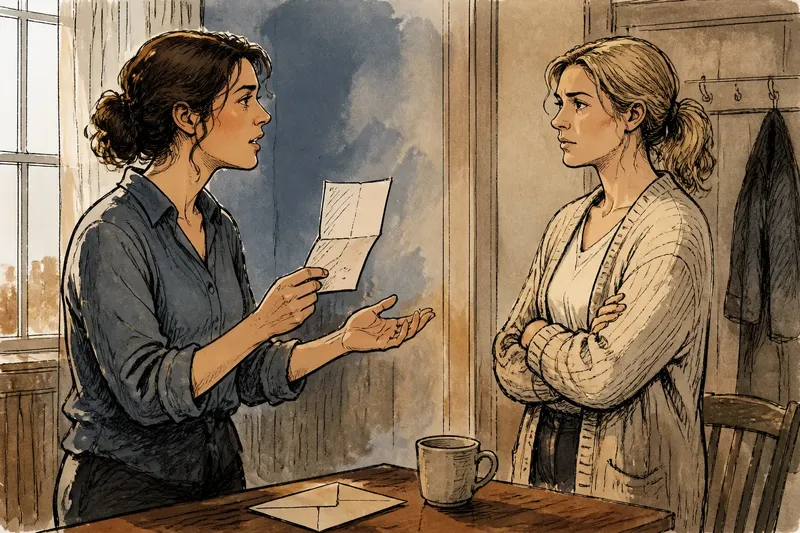
Imagine a reader loses track of which character has the letter during a rapid exchange. The facilitator notes the page and asks what detail the reader needed at that point. If another reader followed the exchange, record what they understood and which line helped; the writer now has two specific responses to weigh rather than a vague instruction to make the scene clearer.
A confusing cue is like a drawer label pointing to the wrong place: the audience has to spend attention working out where to look. The table read shows where that extra effort begins. Revision can then clarify the label or change what the scene asks listeners to track.
Focus the next pass
After the discussion, select one listening question for a short reread. Write it down with the relevant page or scene. Keep the question tied to what the room heard, not to a broad judgement such as whether the section works.
For instance, the question might ask whether listeners can tell why Mara stays after the others leave. Reread the relevant scene with the script unchanged if you want to hear the existing draft cleanly. If the writer wants to compare a possible adjustment, make one visible change and tell the group what has changed; do not introduce a second revision question during the pass.
Ask listeners to identify the line or cue that shaped their understanding. The writer can then decide whether to revise, preserve the ambiguity or take the question into a later rehearsal. Record that decision and the point in the script, so the next session begins with a specific listening task rather than a general pile of comments.
Questions after the read?
Should every mark lead to a change?
No. A mark identifies a point worth reviewing, not a command to revise. Keep it if it affects what listeners can follow; set it aside if it reflects only a personal preference.
Can readers suggest new lines?
They can suggest possibilities after describing what they could not follow. That keeps the writer focused on the audience’s difficulty without treating one reader’s wording as the only solution.
What if readers disagree?
Record both interpretations and the exact cue that prompted them. Their difference may be a useful ambiguity, or it may show that the script lacks a detail listeners need.
What should the reread test?
Choose one question tied to a particular scene and something listeners can report, such as whether they understand why a character stays. Keep it open enough to allow different revisions, but narrow enough that readers can point to the moment their understanding changed.