The Character-Backstory Trap: When Explanation Stops the Scene
The character backstory trap appears when history delays action. Turn biography into a present-tense choice so performers have something specific to play.
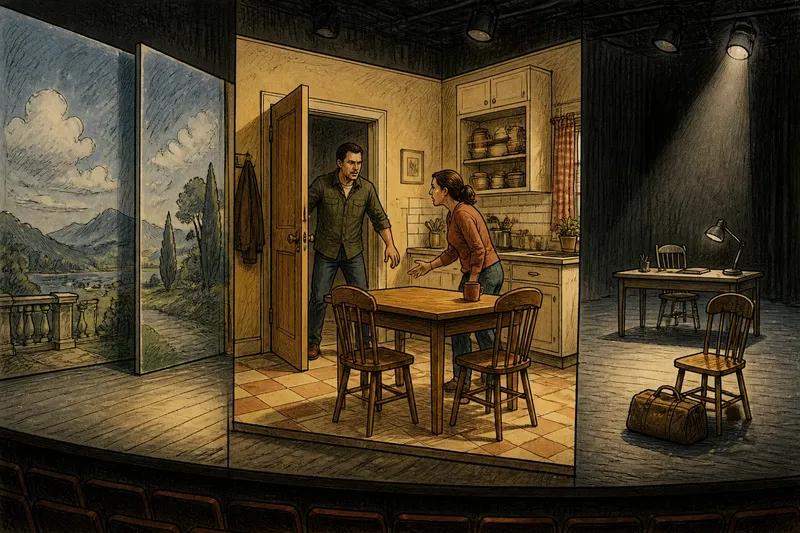
The character backstory trap appears when a scene pauses for a character to recount the past while the present problem waits. In live performance, history works best when it shapes a visible choice: who gets the key, which chair stays empty, or whether a character crosses the room.
Spot the stalled action
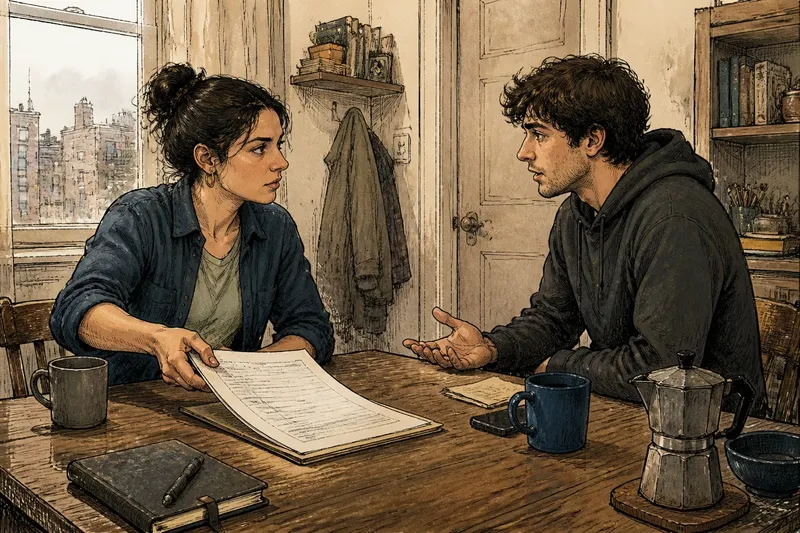
Name the scene’s immediate task before revising its history. Perhaps a caretaker must persuade a neighbour to leave a condemned building, or two siblings are sorting props before a family performance. At the moment the backstory starts, ask whether the task changes, becomes harder or vanishes.
Mark the places where an actor could act: pick up an object, block a doorway, move towards an exit or refuse an offer. If the history passes several such opportunities without changing anyone’s behaviour, the scene may be holding still. Keep the past only if it alters what happens next.
Choose the useful detail
Separate the event from its present effect. A character’s past may explain why they distrust a promise, but the scene needs to show what that distrust makes them do: demand a written pledge, return a borrowed item or refuse to hand over a key.
Write two brief notes beside the passage: “What happened?” and “What do they do now because of it?” Keep the second in the action. Keep the first only when the audience needs it to understand the choice. Biography is the map; the scene is the route the character takes today.
Make memory playable
Give the character a choice with a visible cost. They might expose a private detail, reject an easy solution or accept blame in front of someone who can use it. An actor can play a choice through speech, movement, timing or refusal; an explanation alone gives the actor less to do.
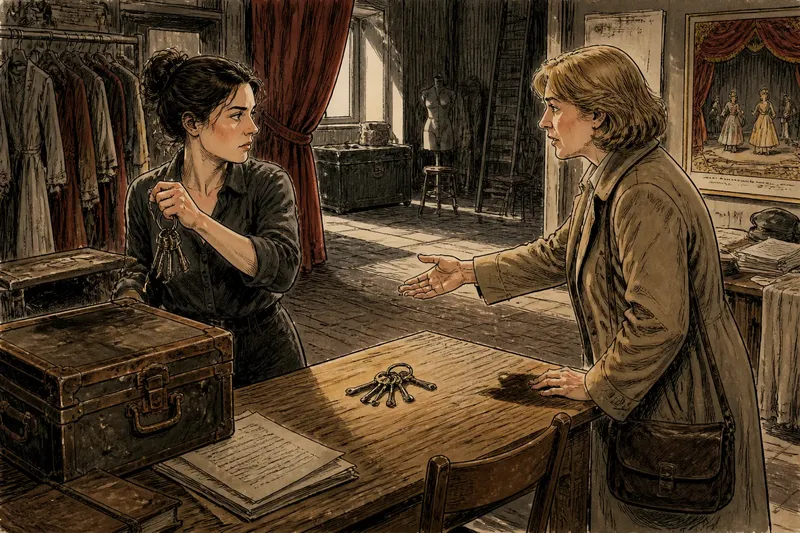
Say you are revising an invented scene in which Mara must hand over the keys to her late aunt’s theatre store-room. The draft includes a long account of how the aunt excluded her from rehearsals. Mara first places the keys on the table; when the buyer says the old prop trunk will be thrown away, she takes them back. She then says, “Aunt Jo built that trunk for the first show.” The action reveals her reluctance, and the short detail explains why this object matters. The trade-off is clear: the audience gets less family history, but the scene gains a decision it can watch.
A choice is like a door left ajar: the audience sees enough to wonder what lies beyond without being led through every room.
Let the room carry meaning
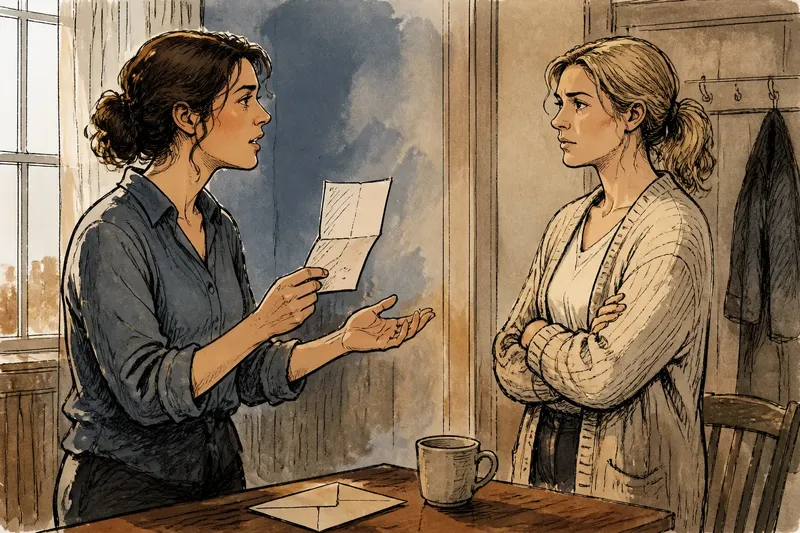
Stage business can suggest a past without turning the scene into a puzzle. A character might avoid a particular chair, straighten a framed programme or hold a letter face-down. Give each action a clear purpose in the present, such as making space, delaying a handover or concealing the letter.
Do not ask one gesture to communicate an entire hidden history. If the audience must know that a character once lost a role to understand a refusal, state that fact plainly. Let the performer show its residue through posture or timing.
Revise with a clear test
Use this pass on a printed script or a shared document. For every stretch of backstory, record what the audience needs to know, what the character does with it and which observable change should follow.
- Check whether the scene’s immediate task is named. If no one can state it, write the task in the margin; if they can, keep that task as the scene’s centre.
- Check each backstory passage for a present action. If none follows, cut the passage or move its essential detail beside a choice.
- Check whether removing a detail makes the choice confusing. If it does, keep the shortest clarifying line; if it does not, remove the detail.
- Check whether an object already shows the relevant feeling. If the audience can read the action without extra explanation, let the object carry it; if not, add a concise line.
- Check what the other character wants during the passage. If they have a distinct aim, preserve the moment that advances it; if not, give them a task or remove the exchange.
- Check the scene’s ending against its opening. If no plan, relationship or position has changed, revise the choice so it affects the next beat; if something has changed, retain the ending’s consequence.
Questions about backstory?
How much backstory belongs in a scene?
Include the detail needed to understand the current choice and its consequence. Save other history for a moment when it changes the action or the audience’s reading of it.
Can a character tell a long story?
Yes, if telling it is an action with a clear purpose, such as confessing, defending a decision or trying to control what another person believes. Make sure the scene’s physical or dramatic situation changes while the story is told.
What if the audience needs context early?
Give the essential fact close to the action it explains. A concise line beside a consequential movement is easier to connect to the present than a separate account before the scene has established its problem.
Carry the choice forward
On your next revision, circle each stretch of explanation and write the character’s present-tense choice beside it. If no choice follows, cut the passage or relocate its essential detail. The character backstory trap loosens when the past changes what the performer does in the room.