The Turn in a Scene: Give the Moment a Before and After
A scene turn changes what a character can do next. Learn to locate the shift and shape a clear before-and-after on stage.
A scene turn changes what a character can do next. In a live scene, the turn becomes clear when a new fact, choice or response closes off one course of action and opens another. Find that change, and you can shape the moment so an audience sees the scene move rather than merely hear people exchange lines.
What Is a Scene Turn?
A scene turn is a shift in the conditions of a character’s immediate action. Before it, the character is trying one thing; after it, that attempt no longer works, or a different action becomes possible. The shift may alter who has control, what a character knows, what they want, or what they are willing to risk.
A turn is not simply a loud line, a surprise, or a change of subject. A sudden noise can startle everyone without changing what anyone can do. A quiet admission can turn a scene if it makes a character abandon a plan, conceal something, or ask for help.
Think of a turn like a door closing behind someone: the room may look the same, but the route back has changed. That does not mean every scene needs a dramatic reversal. It does mean the audience should be able to sense a meaningful difference between the opening situation and the one that follows.
How Do You Locate the Shift?
Look for the first beat after which the character cannot continue as before. Start with the action, not the most quotable line. Ask what the character is trying to get from someone, what response disrupts that attempt, and what they do next because of it.
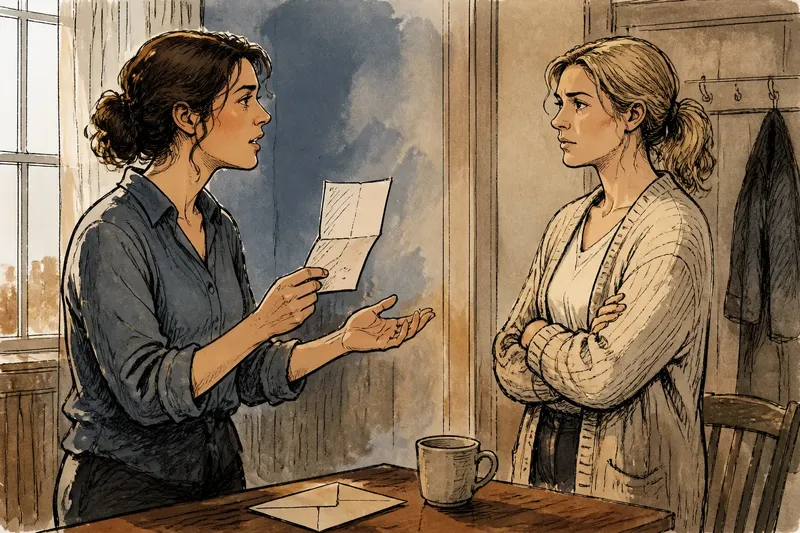
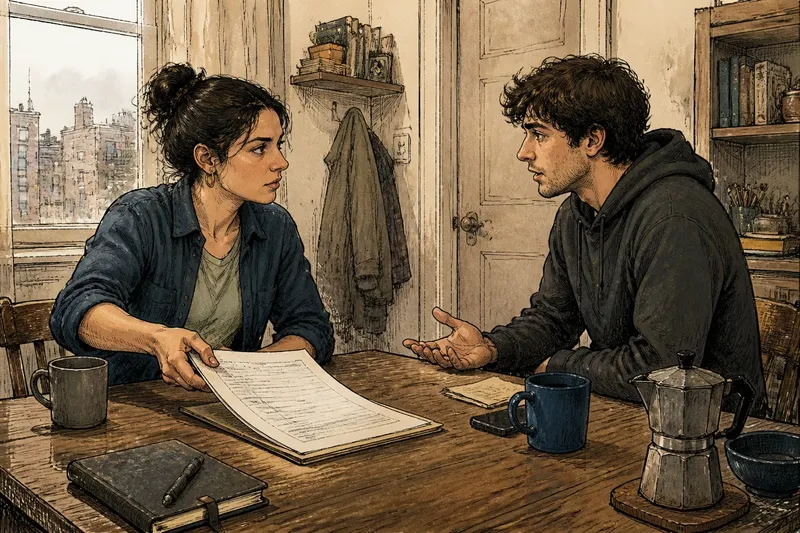
Say you are writing an invented scene in which Mara wants her brother Eli to sign a form before their landlord arrives. Mara puts the form on the table and asks him to sign. Eli says he has already sent a message admitting that he broke the shared boiler. Mara’s original tactic—pressing him to sign in silence—can no longer work. She turns the form over and asks what he told the landlord. The turn is not merely Eli’s disclosure; it is the change from securing a signature to finding out how much trouble his confession has created.
To locate the beat in your own scene, mark three points in the draft:
- Before: What does the character want right now, and what are they doing to get it?
- Pressure: What specific response, event or decision interrupts that approach?
- After: What can the character no longer do, or what new action do they now take?
If the answers to “before” and “after” are effectively the same, you may have a pause or an exchange of information, but not yet a scene turn. You can sharpen it by changing the response so it forces a fresh tactic, or by giving the character a clear decision with an observable consequence.
What Can Change After the Turn?
A turn needs to affect the character’s next move, but it need not change every part of the scene. Identify the one change that matters most, then let the other details support it.
- Knowledge: A character learns something that alters how they interpret the situation. The new knowledge should influence a choice, not sit in the dialogue as background.
- Control: One person gains or loses the ability to direct the exchange. The other may resist, withdraw or take over.
- Intention: A character drops an immediate goal and pursues another. They might stop seeking approval and demand an answer instead.
- Permission: An offer, refusal or boundary changes what actions are available between characters.
- Risk: A character realises that continuing carries a cost they had not accepted before. Their next choice reveals how they respond to it.
These changes can overlap, but a scene becomes muddy if the audience cannot tell what has shifted. Choose a main change and make it legible through action. In a small room, Mara might stop holding out the pen and move the form away from Eli. That gesture gives the new objective a physical shape without requiring either character to explain the scene’s structure.
Does Every Scene Need One Turn?
No. A scene can contain several turns, one gradual shift, or a sustained situation that makes its purpose clear through pressure rather than reversal. The useful test is not whether you can point to a dramatic twist. It is whether the scene changes the characters’ available actions or their relationship to the immediate problem.
If you find several candidate turns, ask which one changes the direction of the scene. Smaller shifts can prepare it or complicate what follows. Keep them distinct enough that the main change does not disappear among minor reactions.
A gradual turn can work when each response narrows the character’s choices. For example, a character might try a polite request, then bargain, then admit what they fear. No single line has to carry the whole shift; the audience watches the tactic change over the exchange.
How Can Actors Show the Before and After?
Give the actor an action to play on each side of the turn. “Before the disclosure, get Eli to sign” is playable. “After it, find out what he told the landlord” is playable too. “Show that the scene has turned” is not an action; it asks for a result without naming a task.
Use the body and objects already in the scene to make the change visible. A character can stop moving towards the door, put down a cup, return a document, or sit rather than leave. These choices should follow the character’s new objective rather than decorate the moment. A gesture is strongest when it changes the conditions of the next exchange.
On the page, protect the beat that causes the change. Avoid burying it beneath a long explanation or a run of reactions that all say the same thing. Let one character act, let the other register it, then give the audience room to see the new tactic begin. The pause belongs where a decision is forming, not automatically after every important line.
During rehearsal, ask the actors to play the scene with a clear objective before the turn and a different objective afterwards. If the shift remains hard to follow, check whether the triggering response is specific enough, whether the new action is visible, and whether the scene gives the character time to change course. Those observations can point to a drafting problem without asking an actor to manufacture extra emotion.
What If the Turn Feels Unclear?
When a turn feels vague, inspect the cause-and-effect link. The audience must be able to connect what happens with the character’s next choice, even if they do not predict that choice. A response that prompts no change in behaviour may be too weak, or the character may already have known the information.
Try these revisions:
- Make the interruption concrete: replace a general disagreement with a refusal, admission, offer or decision.
- Give the affected character a response they can perform, such as withdrawing an offer or changing the question.
- Remove dialogue that repeats the information before the turn has had a chance to land.
- Check that the character’s new tactic follows from what they heard or chose.
- Read the exchange aloud and listen for the exact line or action after which the scene’s objective changes.
These are revision prompts, not rules that every scene must follow. Keep the turn if it changes the scene in a way the audience can track. If it only makes the dialogue sound sharper, find what that sharper exchange lets the characters do next.
Can a Scene Turn Be Quiet?
Yes. A turn can be a small choice with a lasting effect on the scene’s immediate path. A character’s silence, an unanswered question or a refusal to take an offered object can shift the exchange if another character responds to it.
What matters is not volume but consequence. If a character looks away and then continues the same request in the same way, the moment may not have turned the scene. If looking away is followed by an admission, a departure or a changed demand, the audience can read the before and after.
When revising, write one plain sentence for each side: “Before this moment, the character is trying to…” and “After it, the character is trying to…”. The scene turn is the beat that makes the second sentence necessary. That simple check keeps the work focused on what the character can do next, which is the point an audience can watch unfold.