Solo Speech or Shared Dialogue? Choosing Who Carries the Information
Choose monologue or dialogue to shape what the audience knows, clarify who controls a scene’s information and make the form serve the stage action.
Choose monologue or dialogue by deciding whether the audience needs to follow one person’s thinking or watch two people alter the same moment. In a monologue, a single voice carries the passage; in dialogue, each speaker can change what the other says next. That choice shapes what the audience knows and what becomes possible on stage.
Start with the change the passage must create. Perhaps the audience should recognise that a character has altered their view, or see two people interpret the same letter differently. Then decide whether that change belongs inside one person’s thought or depends on another person’s presence and response.
Set the audience knowledge
Write down what the audience should understand by the end of the passage. Keep it precise: a concealed motive becomes visible, a decision is made, or two people’s accounts of an event diverge. This is the passage’s job, not a summary of the whole story.
Now note what the audience and each character know at the start. One character may understand a motive the audience has not yet grasped. A listener may know a fact the speaker has missed. Such differences can create dramatic irony in a monologue or make dialogue turn on correction, evasion and discovery.
Check whether a character has a reason to say background information aloud. A person might explain something to persuade, accuse, reassure or stall. If the facts are already known to everyone in the room, find a reason they have become relevant now—or remove them.
Choose the thinking
A monologue suits a passage whose interest lies in one person’s changing thought. The speaker might admit one thing, qualify it, avoid another, then decide what to reveal. The audience follows that sequence, whether the character speaks alone or addresses someone who stays silent.
Dialogue suits a passage where another person’s response changes the information’s meaning or cost. A claim can meet denial; a question can reveal that the listener already knows more than they admit. The audience follows what each person says and what each person declines to answer.
Do not choose dialogue just because two characters are present. If their lines leave one another unaffected, the exchange may be a speech divided between voices. Nor does a silent character make a monologue inert: attention, refusal or departure can shape the speaker’s choices.
Give the speech a task
Give a monologue a playable purpose. The speaker might be trying to confess without surrendering control, rehearse an argument before using it, or stop someone from leaving. The purpose need not be stated aloud. It should guide the actor’s emphasis, pauses, movement and decisions about what to disclose.
For dialogue, identify what each person wants from this exchange. One may want a clear answer while the other wants time; one may seek to keep a discussion practical while the other presses for a personal admission. Their aims can overlap, but each should affect the lines they choose and the options available to the other.
Mark each shift in tactic. A speaker might move from reassurance to bargaining. A listener might answer, evade, challenge or change the subject. If several lines perform the same function, cut or reshape them so the passage keeps moving.
Track the information
Decide whether the passage turns on information being withheld, misunderstood, disclosed or contested. A monologue can make the audience watch one person struggle to control a private thought. Dialogue can show two people competing to define what a piece of information means.
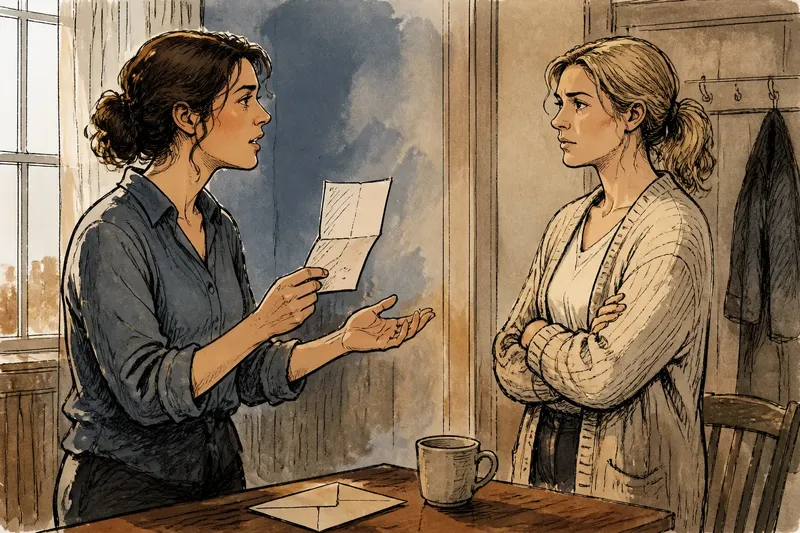
Say you are drafting a scene about a letter that changes a family decision. The invented starting point is simple: Mara has read the letter, and Jo has not. You write a monologue in which Mara weighs whether to reveal its contents, then make each section alter her position: she begins by defending the secrecy, admits what the letter says, and decides to show it. The observable result is that the audience follows Mara’s decision as it forms. If the scene instead needs Jo’s competing reason for keeping the letter hidden, give Jo a voice; their disagreement makes the letter’s meaning a matter of conflict rather than private reasoning.
Keep the audience’s position deliberate. A character can conceal something from another person while making it clear to the house through an aside or a pointed pause. Or the audience can know less than the listener, making a confident speech unsettling. Monologue does not require full honesty, and dialogue does not require full disclosure.
Use the stage space
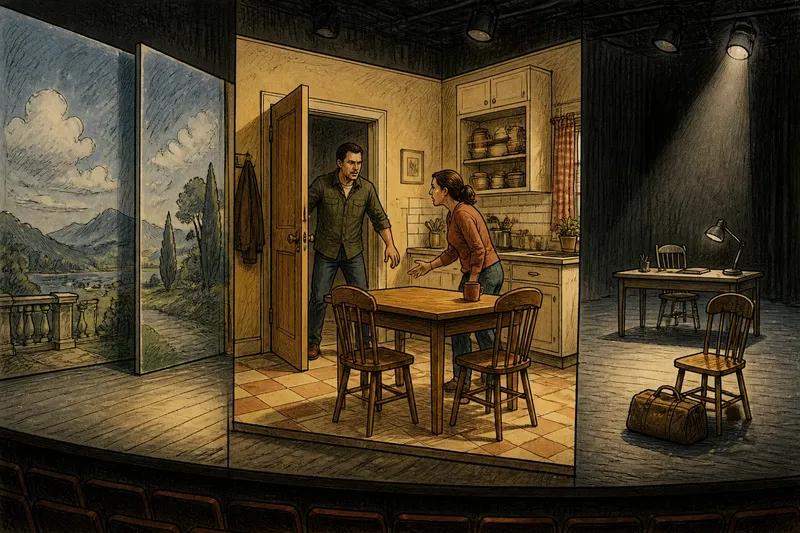
Consider who can hear the speech and what else is happening. A solo speech in a crowded room carries a different risk from one spoken in an empty space. Decide whether the actor addresses the audience, an imagined listener or a person present on stage, and make that relationship legible through focus and delivery.
In dialogue, attention matters as much as speech. A listener can continue folding a coat, look away or refuse to answer. These actions can alter how a line lands and show whether the exchange is private, public or performed for the room.
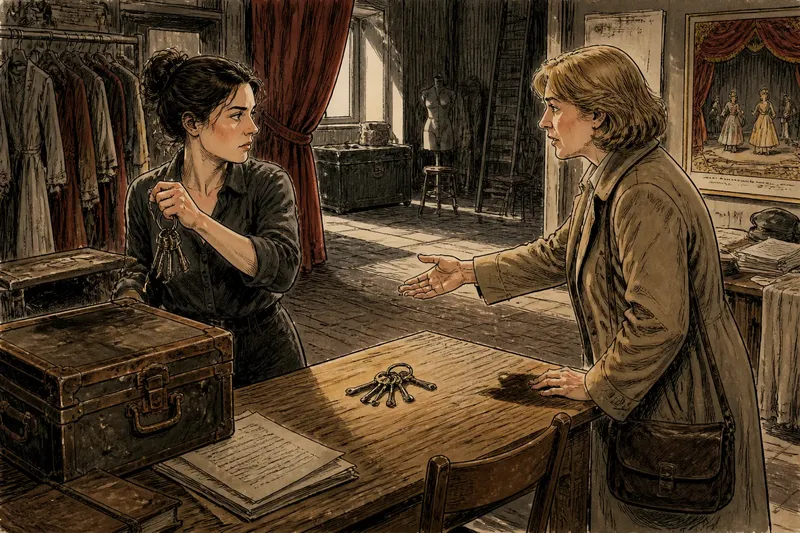
A key on a table can work like a held card: who touches it, leaves it alone or passes it across may shape the next move before anyone speaks. Use the object only if the action changes access, attention or meaning. Otherwise, let it stay where it is.
Revise the chosen form
For a monologue, make the thought develop rather than circle. Remove details the speaker has no reason to mention. Break a long passage with a change in focus, a physical action or a decision, not pauses added only for variety.
For dialogue, make each reply respond to what came before. A question should change the answer’s cost, expose a gap or redirect the exchange; it should not exist only to introduce the next fact. Give both speakers distinct aims, then check that each reply changes the other person’s next choice.
Read the scene aloud with the actors or a small rehearsal group. Mark where attention fades, where a line seems aimed at the audience rather than its stated listener, and where a pause changes the meaning. Ask what the character is trying to do at that moment. If the answer is only “explain the situation”, revise the action beneath the words.
Try a short alternate version: turn the monologue into an exchange, or remove the replies and let one speaker carry the passage. Compare what the audience can infer and what changes on stage. Keep the form that makes the intended change clearest, not simply the version with the most polished lines.
Which form fits?
When should a character speak alone?
Use a monologue when the audience needs to follow one person’s private reasoning, deliberate disclosure or decision. Give the speaker an immediate purpose, even if nobody answers.
When does dialogue work better?
Choose dialogue when another person’s response should change the meaning or cost of what is said. Give that speaker a distinct aim and let the reply affect what follows.
Can a monologue address someone present?
Yes. A character can speak one-sidedly to someone on stage who cannot or will not answer. Stage the listener’s attention, silence or refusal so the audience can see how it affects the speaker.
How can rehearsal reveal exposition?
Notice whether each fact has a playable reason to be spoken and whether a listener’s action changes the exchange. If information arrives in a smooth sequence while nobody makes a choice, revise around a decision, withheld response or change of focus.
Check the decision
Use these checks before settling the form. Each observation points to a practical decision; if the first route does not fit, try the alternative.
- Observe whether the audience must follow one person’s changing thought; if so, use a monologue, then check whether another person’s reply is essential.
- Observe whether a listener’s response changes what the speaker can say next; if so, use dialogue, or make the response a visible action if words are unnecessary.
- Observe whether the speaker has a present reason to reveal the information; if not, add a decision or remove the facts that have no purpose.
- Observe whether both speakers want the same outcome; if so, give them different tactics, or combine the passage into one voice if the exchange has no real contest.
- Observe whether the audience knows more than the listener; if so, use that gap for tension, or clarify the information if the audience needs to understand it immediately.
- Observe whether a stage object changes access or attention; if it does, build the action into the scene, or leave the object untouched if it adds no consequence.
For the letter scene, the invented starting conditions are Mara holding the letter, Jo unaware of its contents and a scene purpose that requires the audience to see Mara decide whether to disclose it. First, write down that audience change. Next, draft Mara’s private sequence: defend the secrecy, acknowledge the letter’s contents, then decide to show it. Read the draft aloud and check that each turn changes her position; if it does, keep the monologue. If Jo’s competing motive is necessary to the scene, write a dialogue version in which Jo resists disclosure and Mara must answer that resistance. The resulting decision is clear: use the monologue when Mara’s decision is the event, and dialogue when the conflict between both people is the event.
Choose monologue or dialogue by naming the change the audience should perceive, then point to the line or stage action that makes it visible. If you cannot identify either, clarify the passage’s purpose before changing its form. A small shift in focus, a refused answer or the movement of a key can make the information’s owner—and the next possible action—clear to the room.